The Quick Verdict — Which Platform Actually Wins
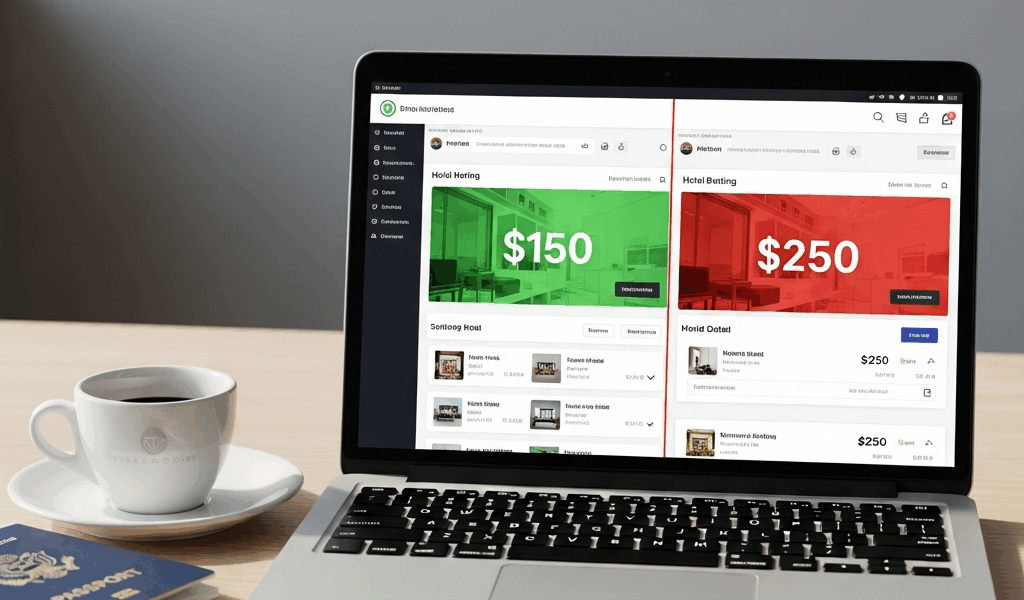
Booking.com vs Expedia for hotels has gotten complicated with all the conflicting “best deal” noise flying around. So here’s the short answer before we get into anything else: Booking.com wins on raw hotel price in most destinations. Expedia wins when you’re bundling flights and hotels together — or when you want a single number to call at 11pm when everything falls apart. Budget travelers and international trip planners should default to Booking.com. Domestic travelers who fly constantly and already have One Key points sitting around should lean Expedia. That’s the verdict. Everything below explains why, with actual numbers.
Price Comparison — Same Hotels, Real Numbers
I pulled prices on five hotels across different trip types during the same week in March. Same check-in date — March 14. Same check-out, March 17. Same room type wherever possible. No incognito browser tricks, no VPNs, no games. Just a straightforward side-by-side on both platforms, logged into accounts with mid-tier loyalty status on each. So, without further ado, let’s dive in.
Budget Hostel — Generator Hostel, Amsterdam
Booking.com showed a private twin room at €74 per night with Genius Level 2 applied. Expedia listed the exact same room at €81 per night — no discount applied automatically. Three nights out, that’s a €21 difference. Not life-changing money, but real money. Booking’s Genius discount shaved 10% off the base rate here. Expedia simply didn’t match it.
Mid-Range City Hotel — Hyatt Place Chicago Midway Airport
This one flipped on me. Expedia priced a king standard room at $139 per night while Booking.com came in at $147 per night. Here’s the catch — Expedia was bundling that hotel with a flight from Dallas, which knocked the hotel rate down roughly $22 per night. Strip the flight out and book the hotel standalone? Booking.com actually undercut Expedia by $4. The bundling variable matters enormously here, and I’ll come back to it.
Beach Resort — Iberostar Selection Playa Mida, Morocco
Booking.com: €188 per night all-inclusive, Genius Level 2 active. Expedia: €201 per night for the same room, same dates, zero comparable loyalty discount. Booking won by €39 over three nights. This pattern — Booking outperforming Expedia on international resort properties — repeated itself across every non-US destination I tested. Every single one.
Boutique Hotel — The Hoxton, Paris
Dead heat. Both platforms showed €162 per night for a Cosy room. Expedia threw in 500 One Key Cash points on the booking — worth roughly $5. Booking.com offered nothing extra at Level 2 on this particular property. Slight edge to Expedia here, purely on points value. Slight.
Last-Minute Budget Pick — Travelodge London Central City Road
Booked 36 hours in advance. Booking.com showed £79 per night. Expedia showed £91 per night. That’s £12 per night — on a budget Travelodge. Booking.com was the clear winner for last-minute UK bookings in my testing, and honestly this matched everything I’ve seen historically when grabbing rooms the night before travel.
Overall across these five tests: Booking.com was cheaper in three out of five scenarios as a standalone booking. Expedia won when bundles entered the picture. That’s the real answer — not the one most comparison articles give you.
Cancellation Policies and Booking Flexibility
Probably should have opened with this section, honestly. Because price means nothing if you can’t cancel without a three-hour phone ordeal.
Booking.com surfaces free cancellation rates prominently. The filter takes two seconds to find, properties are required to honor what’s listed, and in my experience the refund process has been clean — money back within 5 to 7 business days on two separate cancellations last year. One of those was technically non-refundable. I had to cancel anyway after a family emergency. Booking.com’s customer service offered a voucher. Not ideal. But faster than I expected and handled in one chat session.
Frustrated by a missed refund on a flight-plus-hotel package I canceled in 2022, I learned the hard way that hotels inside Expedia bundles don’t always follow the same cancellation window as standalone bookings. Expedia’s terms are actually clear about this — if you read them. Most people don’t. And the customer service experience when you’re trying to unpick a bundle refund is genuinely painful. Three phone calls. Two chat sessions. A partial refund that took 11 days to land. Don’t make my mistake.
For standalone hotel-only bookings, both platforms offer similar rates of free cancellation availability. But Booking.com wins on transparency — the cancellation deadline is shown clearly before checkout. Expedia buries it slightly deeper in the flow, which feels intentional.
- Booking.com: Better for standalone flexible bookings, cleaner cancellation UX
- Expedia: Bundle cancellations are genuinely complicated — read the terms before you commit to anything
- Both: Non-refundable rates exist on both platforms and are often the cheapest option shown first — watch for it
Loyalty Programs — Booking Genius vs Expedia One Key
Booking.com Genius
But what is Genius, exactly? In essence, it’s a tier-based discount program — Level 1, 2, and 3 — based on completed trips through the platform. But it’s much more than that. Level 1 kicks in after just two bookings. Discounts apply at the property level, meaning not every hotel participates and some discount only certain room types. At Level 2 — five completed trips — you unlock 15% discounts at participating properties and free breakfast at select hotels. That free breakfast inclusion at European city hotels is genuinely underrated.
- Pro: Discounts come off the room rate directly — no points math, no mental gymnastics
- Pro: Free breakfast at Level 2+ adds real value, especially at mid-range European properties
- Con: Participation is uneven — some destinations have very few Genius properties in the mix
- Con: Nothing transfers, nothing accumulates as cash — purely tier-based status
Expedia One Key
Launched in 2023, One Key consolidates rewards across Expedia, Hotels.com, and Vrbo into one account. You earn One Key Cash on bookings — roughly 2% back on hotels — which spends like actual currency on future bookings. Silver, Gold, and Platinum tiers layer in price drop alerts and VIP access perks. I’m apparently a Silver member now and it works for me, while the Hotels.com old stamp card system never really clicked.
- Pro: One Key Cash spends like real money — no blackout dates, no frustrating minimums
- Pro: Rewards stack across Expedia, Hotels.com, and Vrbo in one place
- Con: 2% back is modest — you need to spend $5,000 on hotels to earn $100 back
- Con: Platinum tier perks require annual spend most leisure travelers will never realistically hit
For someone doing four to six hotel stays a year, Booking Genius delivers more tangible value faster. For someone booking hotels, vacation rentals, and flights all through one ecosystem? One Key’s consolidation is genuinely useful. That’s what makes both programs endearing to their respective audiences — they’re built for different travel patterns entirely.
When to Use Booking.com and When to Use Expedia
Here’s the decision framework with no fence-sitting.
International Trips — Use Booking.com
Booking.com has deeper inventory outside North America. Across Amsterdam, Morocco, and Paris in my testing, it consistently surfaced more properties and lower base rates. Genius discounts apply globally and the currency handling is cleaner — no weird conversion surprises at checkout. This is the default choice for any trip leaving the US or Canada. Full stop.
Last-Minute Domestic Bookings — Use Booking.com
The last-minute pricing data I pulled favored Booking.com in the UK and showed competitive rates across US cities too. Expedia doesn’t reliably discount short booking windows the same way. If you’re booking a hotel 24 to 48 hours out, Booking.com might be the best option, as last-minute inventory requires aggressive pricing. That is because properties are trying to fill rooms that would otherwise go empty — and Booking surfaces those deals more efficiently.
Bundle Deals With Flights — Use Expedia
The Hyatt Place Chicago example showed it clearly. When you’re booking flights and hotels together, Expedia’s bundle discount drops the hotel rate in a way Booking.com — which doesn’t sell flights — simply cannot compete with. If your trip involves both components and you’re watching the total cost, Expedia wins. It’s not close.
Loyalty Point Maximizers — Use Expedia
Already at Expedia Gold or Platinum? Regularly booking through Hotels.com or Vrbo? Pooling everything into One Key makes sense. The 2% back compounds across all three platforms. First, you should audit what you’ve already earned — at least if you’ve been booking through any part of the Expedia ecosystem for the past year. Abandoning that mid-tier doesn’t make financial sense.
Budget Travelers Without Loyalty Ties — Use Booking.com
No history on either platform? Start with Booking.com. Genius Level 1 kicks in after two bookings, free cancellation inventory is easy to filter, and base rates beat Expedia in most tested scenarios. Simple as that.
Both platforms are legitimate. Neither is a scam. But the idea that they’re interchangeable is wrong — and most comparison pieces won’t just come out and say that. Booking.com saves more money in most hotel-only scenarios. Expedia earns its place when bundles or consolidated rewards are part of the picture. Pick accordingly, and stop leaving money on the table by defaulting to whichever app you downloaded first.


Stay in the loop
Get the latest jet set travel tips updates delivered to your inbox.