Hiking in Santorini has gotten complicated with all the influencer photos and misleading trail guides flying around. As someone who walked the Fira to Oia trail on a scorching July afternoon in broken-in Merrells with half a bottle of water left, I learned everything there is to know about this hike the hard way. Today, I will share it all with you.
What You Are Getting Into
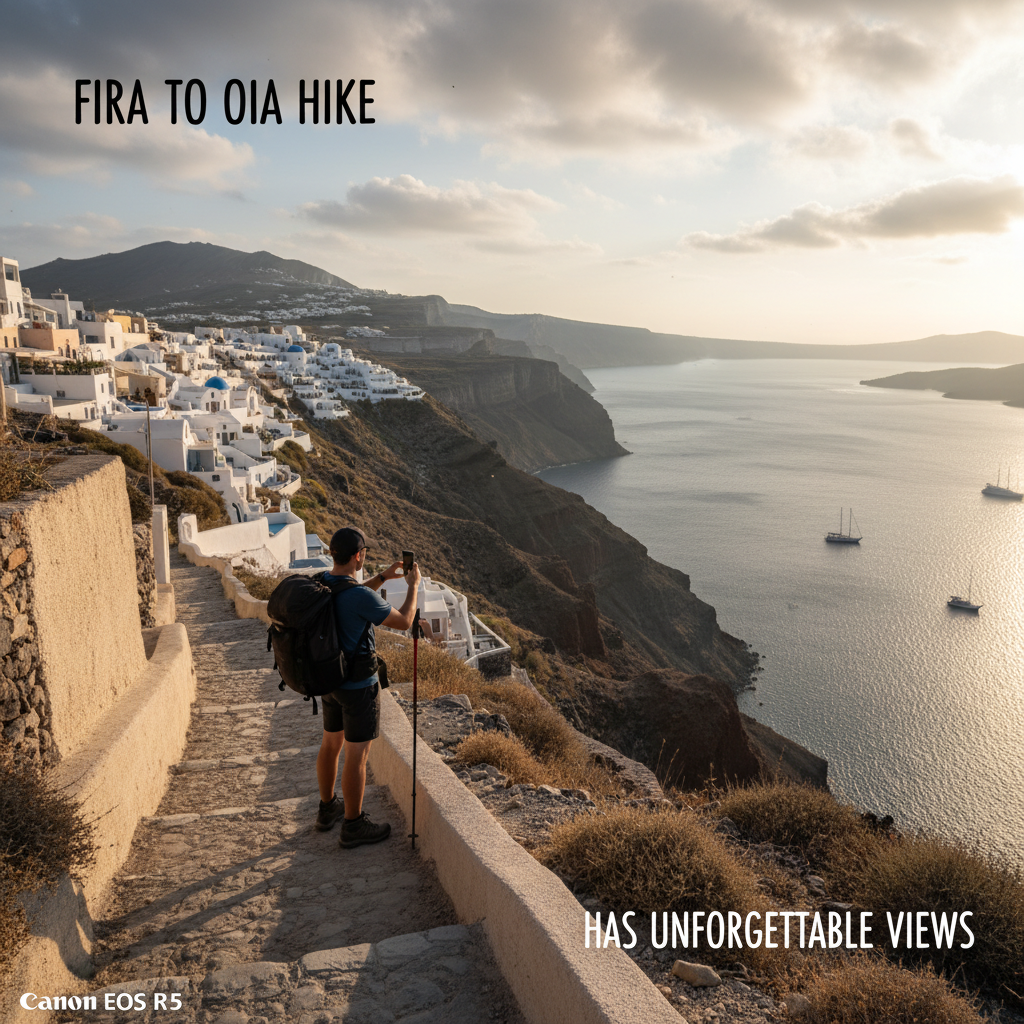
The Fira to Oia hike covers about ten kilometers along the caldera rim of Santorini. Most people finish it in three to five hours depending on how often they stop, and you will stop a lot because the views are genuinely stunning. This is not a difficult trail in the mountaineering sense, but it is not a casual stroll either. There are rocky sections, elevation changes, and zero shade for long stretches.
Starting Out in Fira
Probably should have led with this section, honestly. Fira is the capital and where most people begin. The town is packed with shops, cafes, and restaurants crammed into narrow streets between whitewashed buildings and blue-domed churches. Stock up on water here. I cannot emphasize this enough. Buy two bottles even if you think one is enough. I thought one was enough and regretted it by Imerovigli.
Grab a pastry from one of the bakeries near the main square too. You will want fuel for the first stretch and the prices are lower in Fira than at the shops closer to Oia.
Fira to Firostefani
The first section follows a paved pedestrian path from Fira to Firostefani. This part is easy and scenic. You pass restaurants and hotels, and the caldera views open up on your left. The caldera itself is this enormous ocean-filled crater from a volcanic eruption, and seeing it in person is one of those moments where photos genuinely do not do it justice.
Firostefani
Firostefani is quieter than Fira but just as pretty. I stopped here for coffee at a place overlooking the caldera and spent twenty minutes just sitting there like an idiot staring at the water. That’s what makes this trail endearing to us hikers — it forces you to slow down. From here, the path toward Imerovigli gets steeper but stays manageable.
Imerovigli
They call Imerovigli the balcony to the Aegean, which is one of those tourism phrases that happens to be accurate. It sits at the highest point of the caldera edge. The views from here are the best on the entire trail in my opinion. The Church of Theoskepasti with its blue dome against the white buildings and the sea beyond it — that is the photo everyone takes, and for good reason.
Landmarks Along the Way
- Skaros Rock: This formation near Imerovigli was once a fortress. You can hike out to it as a side trip but it adds time and the footing is rough. Worth it if you are not in a rush.
- Agios Georgios Church: Small chapel with views that make you understand why people build churches in places like this.
Where the Trail Gets Real
Past Imerovigli is where things change. The paved path gives way to rocky dirt trail. This is where your shoe choice matters. I am apparently someone who wears hiking shoes everywhere on vacation, and this section is why. Sandals and flip-flops will not work here. The trail is well-marked though, so getting lost is not really a concern.
The crowds thin out dramatically in this section too. Most of the casual walkers turn back at Imerovigli, so from here it feels like a proper hike instead of a tourist parade.
The Landscape Between Villages
This stretch is where the volcanic character of Santorini really shows. Red and black rock, sparse green scrub, the deep blue Aegean everywhere you look. The contrast between the dry, almost lunar terrain and that impossibly bright water is something else. I stopped to take photos every few minutes and still felt like I was not capturing it properly.
Arriving in Oia
After a few more kilometers of rocky trail, you start seeing the first buildings of Oia. The village is famous for its sunsets, and deservedly so, but it is also beautiful during the day. The streets are narrow and winding, the architecture is stunning, and everything is photogenic in a way that feels almost excessive.
Eating in Oia
You will be hungry. Find a taverna and order moussaka or souvlaki. I ate at a place right on the caldera edge where the waiter brought bread and olive oil before the menu and I almost cried from the combination of hunger and views. The Maritime Museum is worth a quick visit too if you have energy left. It covers the island’s seafaring history and takes maybe thirty minutes.
When to Do This Hike
May to October is the window. I went in July, which works but is hot. Really hot. Morning starts or late afternoon starts are the move. If you go at noon in August, you are going to have a bad time. Sunscreen is mandatory, a hat is mandatory, and water — I said it before and I will say it again — bring more than you think you need.
What to Bring
- Comfortable walking shoes with actual tread. Not fashion sneakers.
- At least a liter of water per person. Two is better.
- Sunscreen and a hat. The trail is completely exposed.
- A camera or phone with storage space. You will take three hundred photos.
- A light snack. Granola bars, fruit, whatever travels well.
The Part Nobody Tells You
The Fira to Oia hike is not really about the hike. It is about spending three to five hours walking through one of the most beautiful landscapes on Earth with nobody rushing you. You can sit on a rock and stare at the caldera for twenty minutes and nobody cares. You can take the same photo fifteen times trying to get the light right. The trail gives you permission to just be somewhere beautiful without a schedule, and that is the real reason people keep doing it.



Stay in the loop
Get the latest jet set travel tips updates delivered to your inbox.