Global Entry vs TSA PreCheck — Which Is Worth It
Global Entry vs TSA PreCheck has gotten complicated with all the conflicting advice flying around. As someone who made the wrong call and paid for it — literally, in a 47-minute customs line at JFK on a Tuesday night after nine hours from London — I learned everything there is to know about this decision. Today, I will share it all with you.
I paid for TSA PreCheck in 2019. Skipped Global Entry to save $42. Don’t make my mistake.
What You Actually Get With Each Program
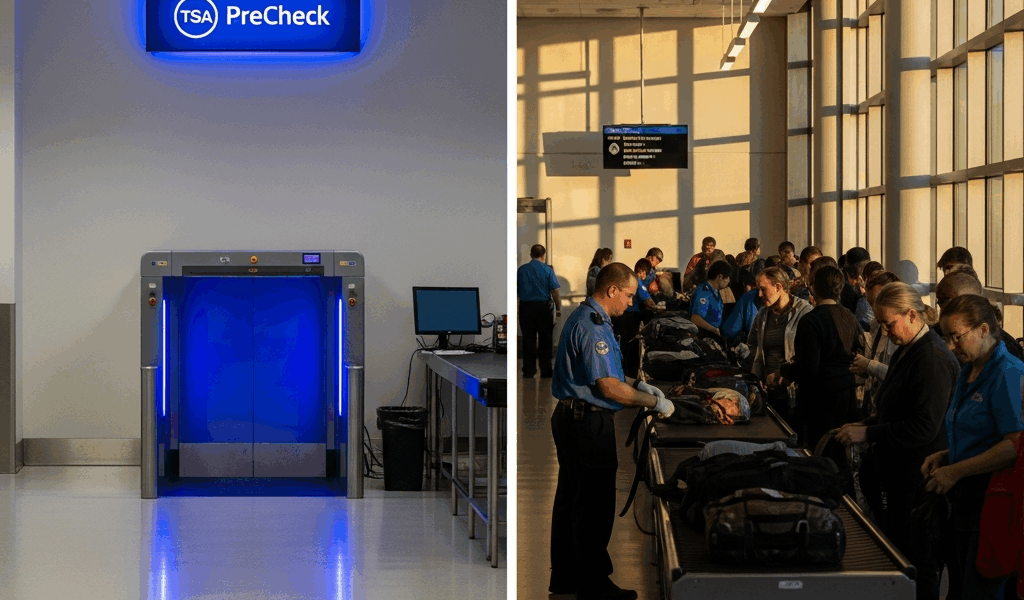
But what is TSA PreCheck? In essence, it’s a $78 five-year pass through dedicated security lanes at over 200 U.S. airports. But it’s much more than that — it’s shoes staying on your feet, laptop staying in your bag, and zero fumbling with a liquids bin while strangers pile up behind you. Covers domestic flights and international departures from U.S. soil.
Global Entry runs $120 for five years. Does everything PreCheck does, then adds automated customs kiosks for U.S. re-entry. Scan your passport. Fingerprints. A few on-screen questions. Grab your receipt and walk. The whole kiosk process takes roughly two minutes — I’ve timed it.
Here’s the part that surprises almost everyone: Global Entry automatically includes TSA PreCheck. The reverse is not true. So you’re not really picking between two separate programs. You’re picking between a domestic-only pass and an international pass that bundles everything the first one offers.
That $42 difference is the only real cost gap. What it actually buys you is — well, a lot. Especially if you leave the country even once in a while.
The Cost Per Use Math Most Guides Skip
Probably should have opened with this section, honestly. Most people skip the actual numbers entirely, which is exactly how they end up making the wrong call.
Run it out over a five-year membership term.
TSA PreCheck at $78:
- 2 flights per year (10 total): $7.80 per use
- 10 flights per year (50 total): $1.56 per use
Global Entry at $120:
- 2 flights per year (10 total): $12.00 per use
- 10 flights per year (50 total): $2.40 per use
That $42 gap works out to $8.40 per year spread across five years. Take one international trip annually and you’re paying roughly $8 extra per year for customs access that would otherwise eat 30 to 90 minutes of your life per international arrival. That’s not a hard math problem.
Never leave the country? PreCheck wins on pure cost efficiency. Add even one international trip per year and Global Entry becomes the obvious call — at almost no additional cost per use.
Which Program Wins for Your Traveler Type
The Domestic-Only Traveler
Two flights a year. Both domestic. Always stateside. TSA PreCheck is your program — full stop. The $78 covers the only benefit you’ll ever actually use. Paying $42 more for customs access you’ll never touch makes no sense whatsoever. Get PreCheck, renew every five years, move on with your life.
The Occasional International Traveler — One or Two Trips Per Year
Get Global Entry. This is the traveler profile where most people blow the call — they underestimate how genuinely miserable customs lines are until they’re standing in one at 11 p.m. after a transatlantic flight. One international arrival per year over five years means five customs experiences. At $42 extra for Global Entry, you’re paying $8.40 per skip. A cab from JFK to midtown Manhattan costs more than that. The interview process is more involved, yes — but you do it once and it covers you for five years.
The Frequent International Flyer
Global Entry is non-negotiable here. Six or more international crossings a year? You already know what a busy Saturday looks like at O’Hare or Miami International. The kiosk isn’t just a convenience — it’s the difference between catching your connection and watching it leave without you. Cost per use drops so low at this frequency that the comparison becomes almost irrelevant. The only real question is why you don’t have it already.
Application Process and Wait Times Compared
Both programs require a background check and an in-person interview. They are not the same process, though.
TSA PreCheck applications go through the TSA website or approved enrollment providers — IDEMIA and Telos being the main ones. The interview runs maybe 10 minutes, mostly identity verification. Approval typically lands within three to five days post-interview, sometimes faster. TSA recently rolled out online renewal for existing members, which cuts out the interview requirement entirely if nothing in your background has changed.
Global Entry applications go through U.S. Customs and Border Protection via the Trusted Traveler Programs portal. More thorough background check. The interview touches travel history, past violations, reasons for applying. After conditional approval — which can take anywhere from two weeks to several months — you schedule in-person at an enrollment center.
Here’s the friction point worth knowing before you commit: Global Entry enrollment waitlists at major airports like LAX, JFK, and Chicago O’Hare can stretch three to six months. Some travelers have waited longer. Have an international trip in 60 days? Apply immediately — or look into enrollment on arrival, where you complete your interview at a Global Entry kiosk after landing on an international flight. Not every airport offers this. But it’s a real workaround that kills the scheduling headache entirely.
Plan ahead. The people who get burned are the ones who apply two months out and assume it’ll work itself out.
Credit Cards That Reimburse the Fee
This is where the whole cost comparison shifts. Several major travel cards cover the Global Entry application fee outright — which also nets you PreCheck enrollment by default. I’m apparently a Chase person and the Sapphire Reserve works for me while the Amex Platinum never quite justified itself, but your math may differ.
- Chase Sapphire Reserve — $100 Global Entry or $85 TSA PreCheck credit every four years. One of the most commonly used reimbursements in travel. (See our Chase Sapphire comparison article for a full breakdown of whether the $550 annual fee actually pencils out.)
- American Express Platinum — $100 Global Entry or $85 PreCheck credit every 4.5 years. Applies to the cardmember, and can sometimes extend to authorized users depending on current card terms.
- Capital One Venture X — $100 Global Entry or TSA PreCheck credit every four years. Lower annual fee than the Amex Platinum at $395, which matters.
- Citi / AAdvantage Executive World Elite Mastercard — $100 Global Entry credit every five years. Worth flagging specifically for frequent American Airlines flyers already carrying this card.
- Bank of America Premium Rewards Elite — $100 airline incidental credit applicable toward Global Entry fees, though it takes a bit more manual effort to trigger correctly.
Hold any of these cards and Global Entry effectively costs you nothing out of pocket. The $120 fee disappears. At that point, choosing TSA PreCheck over Global Entry to save money makes zero sense — you’d be leaving free customs access sitting on the table.
The real decision isn’t PreCheck vs Global Entry. It’s whether you carry a card that covers the fee. If you do, get Global Entry today. If you don’t, run the cost-per-use math above against your actual travel habits and make the call from there. Either way — run the numbers first.



Stay in the loop
Get the latest jet set travel tips updates delivered to your inbox.