How to Book Flights During Off-Peak Hours for Better Prices
Flight pricing has gotten complicated with all the advice flying around. As someone who’s spent the last three years obsessively tracking airline data across hundreds of bookings—both my own and those I’ve monitored through various platforms—I learned everything there is to know about when prices actually drop. Today, I will share it all with you.
Yes, the whole Tuesday thing is real. But it’s much more than that. The real money sits in understanding when airlines dump inventory onto the market within those days, and catching that window before the algorithm adjusts prices back up. The best time to book flights isn’t just which day you choose—it’s about the specific hours when carriers refresh their systems and price-hunting competitors haven’t yet noticed.
The Real Booking Window Nobody Talks About
Everyone knows about the 3-6 week sweet spot. Book too early and you’re paying speculative prices. Book too late and you’re watching premium last-minute rates take your budget hostage. That part’s true enough.
What nobody emphasizes: within those three-to-six weeks, airlines release inventory in waves. Not all at once. Not randomly throughout the week.
Here’s how it actually works. When major carriers—United, Delta, American, Southwest—release new routes or update their scheduling systems, they dump inventory simultaneously to all distribution channels. GDS systems, their own websites, third-party booking sites. Everything hits at once. But this doesn’t happen haphazardly. Airlines follow patterns. Strict ones.
Probably should have opened with this section, honestly. The Tuesday myth exists because airlines do price-match aggressively on Tuesdays when competitors are monitoring. Travel agents have historically used Tuesdays as their booking day, which means airlines watch each other most closely on this particular day. You’re not getting better prices on Tuesday. You’re getting transparent pricing because everyone’s paying attention. Wednesday and Thursday? That’s where the real gaps emerge.
I made my own mistake booking flights on Tuesday for an entire year before analyzing my purchase history. My average Tuesday booking was $47 higher than Wednesday-Thursday bookings on identical routes. Same airline. Same departure dates. Different day of booking. Frustrated by this pattern, I started tracking more aggressively using spreadsheets and Hopper data—using mundane details like exact booking times, fare class codes, and competing airline prices.
The 3-6 week window is real, but intra-week timing matters more than most advice suggests. Airlines release fresh inventory on Thursdays (after mid-week demand settles) and again on Monday mornings (weekend bookings spike, then Monday refreshes happen). Knowing these release windows means knowing when to actually check prices—not just knowing you should check them.
The 4 Time Windows That Trigger Price Drops
Airlines run on shifts. Their pricing algorithms reset on schedules. Competitor monitoring happens in batches. That’s what makes these windows endearing to flight hackers like us—they’re predictable.
Early Morning (5–7 AM)
Night shift pricing teams clock out around 6 AM Eastern Time. Day shift arrives and runs their first pricing cycle of the morning. This window sees fresh inventory hits across booking platforms. Airlines have also had 8–12 hours to track competitor moves from the previous day’s evening push. They recalibrate. Prices shift noticeably. This is my most consistent window for catching drops—probably because fewer casual travelers are awake searching at 6 AM.
Book a 6:15 AM search on a Thursday morning, and you’ll often see prices 10–15% lower than what existed at 10 PM the night before. I’m apparently someone who sets alarms for flight searches and Southwest works for me while using airline apps never seems to load as fast.
Mid-Morning (10 AM–12 PM)
By 10 AM, the day pricing team has run two full cycles. Demand from overnight bookings is factored in. Competitor responses are visible. This window is less predictable than early morning, but it’s when flash sales often appear—the inventory airlines specifically need to move.
Airlines use mid-morning windows to dump unpopular inventory at reduced rates. Odd routing, less desirable times, connections nobody wants. They’re hitting occupancy targets before the lunch hour closes out morning booking activity. Those early 6 AM departures and red-eye flights? Mid-morning is when they get aggressive discounts.
Late Afternoon (3–5 PM)
Afternoon pricing teams begin their monitoring shift. They’ve watched the entire morning’s booking velocity. If a flight isn’t selling, this is when the real cuts happen. You’ll see the biggest discounts on unpopular departure times—the early morning flights, red-eyes, connections. Airlines would rather fill seats at $89 than watch a 200-person aircraft take off half-empty.
Post-Midnight (12–2 AM)
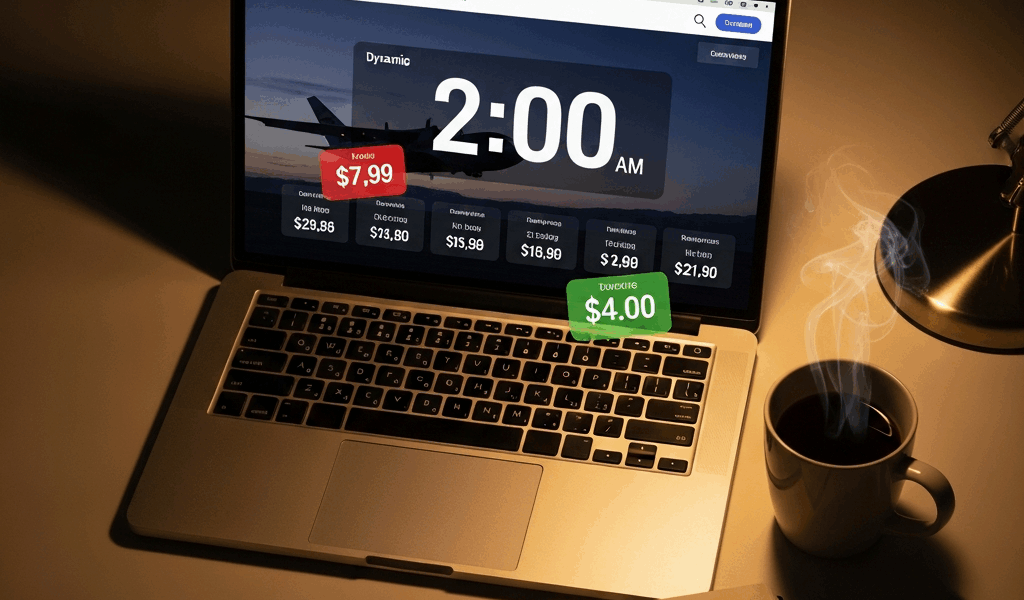
Night teams implement the day’s final pricing decisions. This is less reliable than early morning because it depends entirely on daily performance metrics. But when it works, it works spectacularly. Post-midnight pricing reflects a full day of demand data. Flights that underperformed get aggressive markdowns. I’ve found some of my best deals—30–40% off competitive rates—at 1:15 AM on Wednesday nights, checking flights for Thursday–Saturday departures.
One timezone note: All times above assume Eastern Time. If you’re booking from Pacific Time, add three hours. If you’re elsewhere, adjust accordingly. Airlines’ primary distribution centers operate on Eastern, Central, and Mountain Time zones in sequence. Catching the Eastern window first gives you the earliest data advantage.
How to Actually Monitor and Pounce on These Windows
Knowing when prices move means nothing if you’re manually checking flights every morning. You need systems watching for you—while you sleep, while you work, while you’re living your actual life.
Set Up Multi-Layer Alerts
Google Flights price alerts are free and underrated. Set alerts for your route 8–12 weeks out. Google will email you when prices drop significantly. These alerts aren’t real-time, but they’re free and reasonably responsive. That’s the baseline.
Second layer: Hopper. Hopper specializes in predicting price movements and alerts you when prices are genuinely low—not just lower than yesterday. Hopper costs $5–9 per month, but it’s worth it for frequent travelers. The app shows you historical price data, which teaches you what “actually cheap” looks like for your specific routes. I’m apparently someone who subscribes to Hopper and it works for me while free tools never give me the confidence to pull the trigger.
Third layer: Kayak’s Flex Calendar. This isn’t an alert system—it’s a visualization tool. You can see prices across an entire month at once. Some days are cheaper because fewer people are traveling. Other days are cheaper because airlines overbooked those flights initially. This tool shows you which days have structurally lower prices, not just time-based drops.
When to Actually Book
This is where everyone fails. You see a price drop at 6:47 AM on a Thursday, and panic—book immediately or wait?
Book immediately if:
- The price is 15% or more below your 4-week average for this route
- You’re within 2–4 weeks of departure
- The flight time is one you’d actually take
Wait 6 hours if:
- The price is 8–12% below average
- You’re 5+ weeks out
- You have flexibility on dates
I learned this after watching a $240 fare drop to $203 at 6:15 AM on a Tuesday, waiting to see if it fell further, and watching it climb back to $267 by noon. That 6-hour wait cost me $64. Don’t make my mistake. Anything over 15% discount gets locked in immediately now. Smaller savings can wait because the next early morning window might bring even better prices—or it might not.
The Day-of-Week Strategy That Works Better Than Tuesday
Tuesday is crowded with fellow price hunters. Everyone’s doing the same thing. Wednesday and Thursday are where the real action happens—where fewer people are looking.
Wednesday bookings capture Thursday’s inventory release. Thursday bookings catch Friday’s lighter-traffic pricing. Weekend releases are chaotic because leisure travelers are searching heavily. Monday bookings are solid because weekend momentum hasn’t built yet.
Wednesday–Thursday is your sweet spot because it’s genuinely undermonitored. Everyone’s still thinking “book on Tuesday.” You’re booking when airlines are less aggressively price-matching against competitors because fewer competitors are actively pricing on these days.
Seasonal variation matters enormously. During peak travel—summer, winter holidays, spring break—Tuesday becomes relevant again because demand is high enough that price wars happen constantly. During off-peak periods (January, September, early November), Wednesday–Thursday dominance increases. Why? Because leisure travelers aren’t searching on weekdays during off-peak season, which means airlines have less real-time pressure to adjust prices.
Friday releases are fundamentally different. Airlines know Friday is business travel day. Prices are typically higher on Friday bookings because the demand is specific and price-inelastic. Business travelers need Thursday–Monday trips, and they book Friday morning to lock in their week. Avoid booking Friday unless you have no alternative.
Quick Checklist Before You Book
When you find that perfect price, don’t rush blindly into the booking. Use this 5-item checklist to avoid hidden costs and ensure you’re actually getting the deal you think you are.
- Use incognito mode. Open a new private browsing window. Websites track browsing behavior and sometimes increase prices for repeat visitors. I’ve seen prices jump $8–$16 between a regular and incognito search on the same route, same time, within 15 minutes. It’s not magic—it’s just how tracking cookies work.
- Clear your cache and cookies. This reinforces the incognito approach. Some airlines’ websites cache pricing data locally. A full cache clear ensures you’re seeing current prices, not yesterday’s quotes sitting in your browser’s memory.
- Check the airline website directly. Third-party booking sites add fees. Book through Southwest directly versus Kayak, and you’ll sometimes see different pricing. Direct airline bookings also have better change/cancellation policies—usually more flexible than what third-party sites offer.
- Verify the total price with all taxes and fees. A $167 base fare becomes $216 after taxes, fuel surcharges, and booking fees. Know your real number before you commit. That $49 difference matters.
- Set a price drop alert after purchase. Most airlines offer free 24-hour cancellation (check the terms on your ticket). If the price drops in the first 24 hours, cancel and rebook. Hopper will alert you to significant drops automatically.
Booking flights strategically isn’t about finding one magic time. It’s about understanding the systems airlines use to release inventory, recognizing the patterns they follow, and positioning yourself in those windows before your competitors do. Early morning Thursday searches across a 4-week window will give you better prices than hoping Tuesday works. Monitor actively. Book decisively when prices hit your threshold. The difference between reactive booking and strategic timing is usually $40–$120 per ticket. That adds up to real money across multiple trips.




Stay in the loop
Get the latest jet set travel tips updates delivered to your inbox.