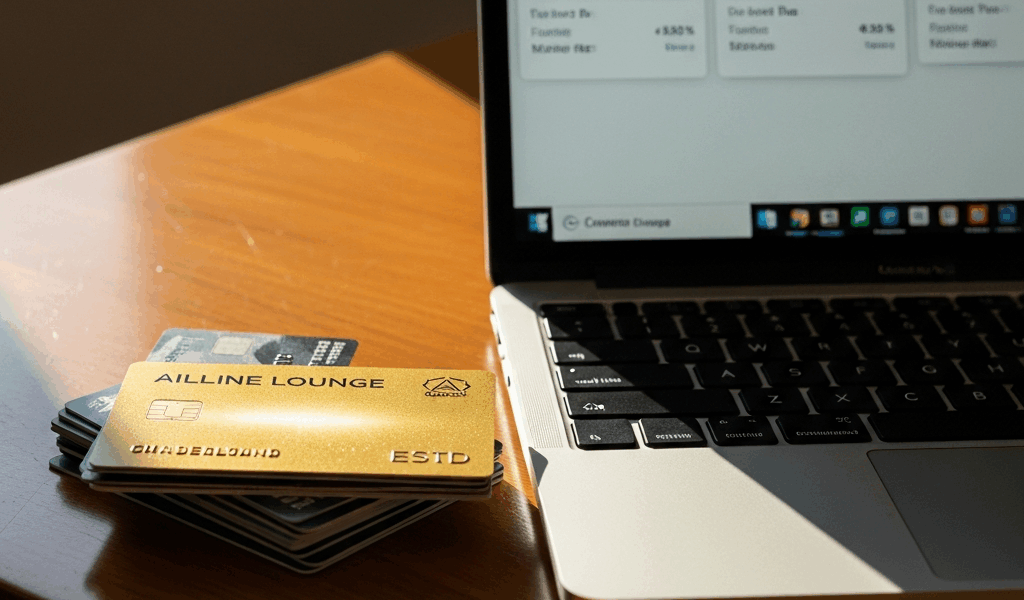
How to Earn Elite Status Without Spending Much Money
I used to think earning airline elite status required either frequent business travel or a six-figure salary. Then I watched a friend hit Gold status on United without taking a single flight that year. Turns out, how to earn elite status without spending much money is less about flying and more about understanding the loopholes the airlines have quietly built into their own programs — and honestly, once you see them, it’s hard to unsee.
Here’s what most people miss: elite status qualification isn’t about your actual airfare spend. It’s about what the airline counts as qualifying spend. That distinction changes everything.
Use Airline Credit Card Sign-Up Bonuses to Earn Qualifying Spend
This is the most direct path. And probably too obvious once you see it.
Open a co-branded airline credit card. The sign-up bonus points count toward your annual qualifying spend threshold. The bonus itself? That’s bonus points, not qualifying dollars. But the annual spending you need to meet to get the bonus — that absolutely counts.
Take the United Explorer Card. Right now it’s 60,000 bonus points after you spend $5,000 in the first three months. That $5,000 you’re spending to hit the bonus? It counts directly toward United’s Premier status qualification. Spend $5,000 to get the bonus, and you’ve instantly moved $5,000 toward the $15,000 or $25,000 threshold needed for Silver or Gold status.
American Airlines Citi Platinum Card pushes 75,000 points after $6,000 spend in the first six months. Delta Reserve: 75,000 points after $5,000 spend in the first three months. Each one moves you substantially closer to elite status without buying a single ticket.
The Delta math: You need $25,000 in qualifying spend to hit Gold Medallion status. Open the Delta Reserve (it’s $550 annually, but you get a $100 statement credit and 10,000 annual bonus miles back), spend $5,000 to hit the sign-up bonus requirement, and boom — you’re 20% of the way there. The annual fee stings, but the credit absorbs most of it.
The catch nobody mentions: you need actual spend to meet minimum thresholds. You can’t manufacture $5,000 in spending from just the bonus. You have to genuinely charge $5,000 on the card. But for someone redirecting grocery, gas, and dining purchases to an airline card for three months? Painless.
Stack Co-Brand Cards Across Airline Partners
Probably should have opened with this section, honestly. This is where the real status hacking happens.
Most people open one airline card. Smart people open four or five from the same airline or alliance and stack the qualifying spend across all of them.
Let’s work with American Airlines. The Citi Platinum Card ($0 annual fee) — 75,000 points after $6,000 spend. The Citi Prestige Card ($450 annual fee) — 75,000 points after $15,000 spend. The AAdvantage Aviator Card ($99 annual fee) — 60,000 points after $5,000 spend. Chain these three together, and you’ve got $26,000 in combined spending requirements. All of it counts toward American Aviator Elite status thresholds.
That $26,000 in qualifying spend gets you most of the way to Executive Platinum (which requires $15,000 in a calendar year) or takes you clean through Platinum and past it. You’ve also picked up 210,000 points in bonuses. Convert those to a $2,100 statement credit at 1 cent per point conservatively, and your net cost for this status is basically the annual fees minus the credit categories you’d earn anyway.
United’s equivalent play: United Explorer ($695), United Business Explorer ($695), and the United Club Infinite ($699 with $150 annual credit). Spend requirements: $5,000 + $5,000 + $10,000. That’s $20,000 in qualifying spend — exactly what you need for United Premier Platinum or Gold Elite Plus. Annual fees total $1,339, but the credits and perks (United Club passes, travel credits) cut the real cost to under $400 for three years of status qualification spend.
The real leverage emerges when you apply these cards over 12–18 months, not all at once. Space applications three months apart to avoid credit inquiries stacking. Hit minimum spending on each card as it comes. Watch qualifying spend accumulate.
Leverage Status Match and Challenge Programs
Status matching is the insurance policy of status hacking. It’s also becoming rarer — which is why this window matters now.
American Airlines still runs occasional status match offers. They’ll match you to Gold or Platinum elite status if you hold equivalent status with another airline and apply during their promotion windows (usually January–February and July–August). Eligibility is real: you need an active elite status card or login confirmation, not just a screenshot.
United has historically offered status challenges — a path to earn status by hitting spending or segment thresholds in a compressed 120-day window. A United Challenge might require $10,000 in qualifying spend or 15 segments. Doable if you’re already funneling card spending through qualifying spend buckets.
Delta’s status matching is sporadic. When it runs, you need comparable Medallion status, proof (account screenshot), and a willingness to apply during the limited window they publicize.
The honest gap: these offers are declining. Airlines see what you’re doing. American tightened its match policy last year. United made challenges harder to qualify for. Delta rarely runs them. Treat this as a fallback option, not your primary plan. If you qualify, great. If the window closes before you act, you haven’t wasted your primary strategy.
Book Paid Tickets Below Your Status and Supplement with Miles
The accounting trick: paid ticket price plus taxes count toward qualifying spend. Award tickets do not. Mix the two strategically, and you hit status thresholds while minimizing cash outlay.
Say you need $15,000 in qualifying spend for Silver status on United. You could book 15 round-trip flights and spend $15,000. Or you could book five paid round-trips at $1,000 each ($5,000 total) and ten award flights for the miles you’ve accumulated. That gets you $5,000 in qualifying spend without blowing your budget on airfare.
Better example: A United member needs to hit $25,000 for Gold. They open the United Explorer ($5,000 qualifying spend), apply for the United Business Explorer ($5,000 qualifying spend). That’s $10,000. They book 10 one-way flights from a hub to a nearby city at $75 each — genuinely cheap fares, real bookings — for another $750 in qualifying spend. They book the remaining five round-trips ($4,000) as award tickets paid from miles they’ve accumulated. Total cash: $5,000 from card minimum spend plus $750 from paid fares. That’s $5,750 to hit a $25,000 threshold. The math is real.
The requirement: you need a bank of miles to execute this. Build that from the card bonuses themselves. The Explorer bonus alone (60,000 points) covers multiple cross-country flights at standard saver award rates.
Time Your Status Qualification Around Bonus Earning Periods
Airlines periodically offer 2x or 3x earning multipliers on specific purchases or fare classes. A $500 ticket booked during a 3x spend period counts as $1,500 toward status qualification. These windows are usually narrow — sometimes just a few weeks — but they’re predictable.
United often runs 3x earning promotions on economy fares in January and February. American runs bonus earning periods around summer travel season. Delta ties multipliers to Platinum members but sometimes opens them broadly.
The tactic: monitor airline emails and frequent flyer program websites for these announcements. When one drops, plan your paid ticket bookings to coincide. If you need to spend $2,000 more to hit Gold status and a 3x earning multiplier is active, book a $1,000 ticket during the window. It counts as $3,000 toward your threshold.
I missed a 3x earning period last year and paid the price — literally spending an extra $3,000 to hit a status tier I could have qualified for with perfect timing. Now I calendar these promotions at the start of each year and plan status qualification spend specifically around them.
The realistic path forward: combine these tactics. Open one or two airline cards in month one. Book 2–3 paid fares during a bonus earning period in month two. Apply for a second card in month three and hit its minimum spend. By month four or five, you’ve hit Gold or Platinum status without $25,000 in actual airfare spend. Your real cash outlay is maybe $3,000–$5,000, most of which comes from credit card annual fees and the small paid fares you booked at the right time.
Elite status used to be a badge of frequent flying. Now it’s a system to be understood.




Stay in the loop
Get the latest jet set travel tips updates delivered to your inbox.