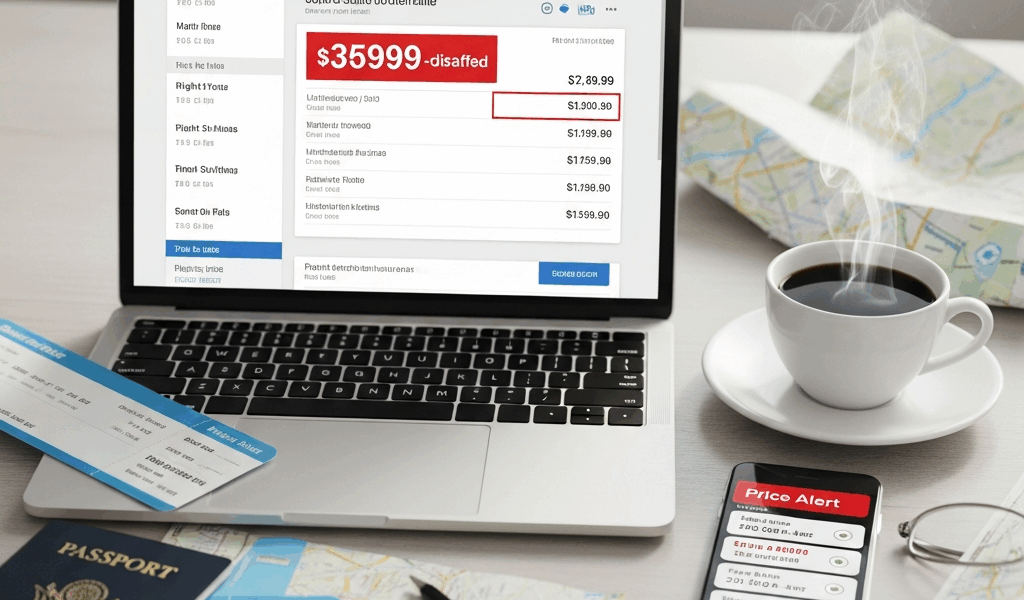
What Actually Counts as a Mistake Fare
I’ve been tracking flight prices obsessively for about six years now, and mistake fares have gotten complicated with all the noise flying around. Most people confuse a mistake fare with just… a good price. They’re different animals entirely.
A mistake fare is a genuine pricing error—usually caused by a glitched algorithm, a typo in the fare database, or a temporary system malfunction. A flash sale is intentional. A cheap baseline price is just the market doing its job. You need to know the difference because only one of them disappears in hours.
Real example: Early 2022. Someone booked LAX to Tokyo for $150 roundtrip. Not $1,500—$150. That was a mistake fare. The airline’s system had somehow inverted the decimal placement or dropped an entire pricing tier. Economy fares to Tokyo from LA run $400–$900 typically. A $150 price was so far outside the reasonable range that it screamed error. The airline cancelled thousands of those bookings within 36 hours, though some passengers who booked through third-party sites fought back and won.
Compare that to when United accidentally released premium economy seats at economy prices for a few hours last year—also a mistake, also caught and cancelled. Then there’s the scenario where JetBlue runs an actual promotional sale on Boston-to-Cancun routes for $89 one-way. That’s intentional. It might be low, but the airline owns the decision. Airlines don’t reverse those bookings.
The real tell is scale. When a single route—or worse, a specific cabin on a specific date—is priced at 60–80% below the moving average, and competing airlines on the same route are charging double or triple, you’re looking at an error. That’s what makes spotting these endearing to us deal hunters, honestly, because it saves you from chasing phantom deals that evaporate anyway.
The Tools and Alerts That Catch Errors First
You need redundant monitoring. I use four tools simultaneously because no single platform catches everything, and I apparently need the competitive edge.
Airfarewatchdog is my primary layer. Set up price-drop alerts for your baseline routes at a 50% threshold below your historical average. You’ve been tracking LAX-to-Denver flights and the 6-month average sits at $240? Alert me at $120 or below. You can customize alerts by airline, departure month, or day of week. The interface is clunky—feels like 2012—but the data pipes directly from their monitoring engine, so you get notifications within minutes of a price shift, not hours.
Secret Flying covers a different slice. They specialize in premium cabin errors and obscure routing mistakes. Their team actively hunts for errors, then publishes verified finds. Set up email alerts by route or region. I get digests every morning at 6 AM. The downside: their popular deals disappear within 4–6 hours, so you need to be ready to move immediately. Don’t wait.
Scott’s Cheap Flights skews toward transatlantic and long-haul finds. They don’t use algorithms—humans flag potential errors and validate them before publishing. You pay $49/year, and you get daily deal notifications. I’ve caught maybe two legitimate mistake fares through this service annually, but they’ve all been solid. The premium tier ($199/year) includes phone call alerts for truly rare errors, and that’s where the speed advantage lives. A phone call beats an email by 15–30 minutes in practice.
Lesser-known option: Going.com. They aggregate error fares specifically and run their own historical baseline tracking. Setup takes 10 minutes. Enter your home airport, preferred destinations, and how far in advance you typically book. The system learns your patterns and flags outliers. I’ve found two business-class-cheaper-than-economy errors here that the bigger platforms missed because Going focuses on smaller regional routes.
Setup protocol: Configure alerts at 50% below your known baseline. If you’ve never flown a route before, use Google Flights’ historical pricing feature—click “Flexible Dates,” then the price chart—to establish a 6-month average. That’s your baseline. Any price more than 50% below that threshold gets immediate investigation. Not a book yet. Just triage.
Red Flags That Signal a Pricing Error
Not every cheap price is a mistake. Learning to spot actual errors saves you from wasting time on deals that are just normal low prices.
Connecting flight pricing anomaly: You find a roundtrip LAX-to-Tokyo for $280, but the LAX-to-Narita leg alone (one-way) is showing $350+ on the same airline the same date. That’s a pricing error. Connecting flights cost more than their component legs, not less. This happens because the airline’s database didn’t properly sync multi-leg pricing with single-leg pricing during an update.
Premium cabin inverted against economy: Business class roundtrip is $1,800 when economy is $2,400 on the same flight, same date. That’s not a value—that’s a system failure. I’ve seen this on American and United when they’ve had database syncing issues. It catches baggage handlers’ attention fast because their internal systems catch the contradiction before customers can fully check out.
Price drops 80%+ from the 6-month moving average: Your baseline is $420 for a route, and suddenly it’s $75. Use Google Flights’ historical pricing—the price-trend graph at the bottom of the search results—to verify the movement. Every other airline on the same route is still at $380–$450, but one carrier dropped to $75? You’ve spotted an error. That specific airline probably has a typo in their fare database or a corrupted multiplier somewhere in their system.
Quick verification workflow: Pull up Google Flights for the same route, same dates. Check 2–3 competing airlines. One is $95 while they’re all charging $400+? Check the itinerary for hidden stops or different seat classes. If it’s identical, you’ve found a mistake. You have about 20–30 minutes before the airline’s internal audit catches it.
The Speed and Booking Strategy
A mistake fare usually lives for 12–48 hours, not longer. Airlines catch these through automated alerts that flag prices deviating more than X% from baseline, or through customer service complaints. Once caught, the fares vanish entirely or revert to normal pricing.
The booking process matters enormously. Use the airline’s website directly, not a third party. This protects you legally because you have a direct contract with the airline. If you book through Expedia or Kayak and the airline cancels due to error, the OTA often won’t refund—it becomes a he-said-she-said between you and them.
I made this mistake in 2019. Found a $140 transatlantic mistake fare through Google Flights, booked via Priceline. The airline cancelled it within hours. Priceline told me to contact the airline. The airline said Priceline sold unauthorized inventory. I lost $140 and spent three weeks on hold. Don’t make my mistake.
When you book, use a major credit card—not debit. If the airline cancels and refuses refund (which they sometimes do, incorrectly), your credit card issuer can dispute it as an unauthorized charge. You’ll usually win because the airline knowingly oversold pricing that contradicted their own system.
What happens if you book and the airline cancels? Legally, they’re supposed to offer a refund or rebook you at the fare you paid. In practice, they refund the mistake fare price and rebook you at the normal price. You’re out the difference. Very rarely, aggressive passengers have threatened small claims court and won refunds, but the airline has no legal obligation to honor an error they cancel.
Speed is the only insurance. Book within 15 minutes of finding the error. Don’t triple-check. Don’t shop around. Complete the transaction. By the time you’ve finished paying, you’re usually safe because the airline needs system-level authorization to cancel bookings in bulk, which takes 4–12 hours.
Where Mistake Fares Hide Most Often
Certain routes and booking patterns surface errors more frequently than others.
Low-search-volume routes: Flights from secondary cities or to less-popular destinations are monitored by fewer pricing bots. A mistake on the Denver-to-Montego Bay route might sit visible for 18 hours because fewer travelers search it. Populated routes like New York-to-London get caught within 4 hours. If you book from a smaller airport or to an emerging destination, your odds improve significantly.
Premium cabin errors: Business and first-class pricing contains more variables because these fares are dynamic, complex, and less frequently searched than economy. A glitch in the premium tier gets caught slower. Premium cabin mistakes usually represent bigger absolute savings—$1,200 instead of $5,000—so they’re worth hunting for if you monitor the right alerts.
Multi-leg bookings: When you build a custom routing (LAX to Denver to Chicago, then back via Boston to LAX), the system has to calculate pricing across multiple fare zones and connections. More calculation layers mean more failure points. I’ve found more errors in complex routings than in simple roundtrips.
Certain airlines have historical patterns. Not because they’re worse at pricing, but because their systems are older or more prone to specific glitch types. I won’t name current ones—these things change with software updates—but you can identify patterns by tracking your own data. If you see a mistake on Airline X, watch their inventory more closely for the next week. They sometimes have cascading issues.
The highest-value errors tend to hide on premium long-haul routes—transatlantic business class, Asia-Pacific first class—where a single pricing error can save you $2,000–$5,000 per ticket. Set up secondary alerts specifically for these routes at 60%+ discount thresholds. The dollar value is worth the extra monitoring.



Stay in the loop
Get the latest jet set travel tips updates delivered to your inbox.